
How to Pay Your Domestic Worker Digitally (And Why You Should)
Learn how to pay your domestic worker digitally using SOLmate — safer than cash, with instant delivery and a clear payment record for both sides.
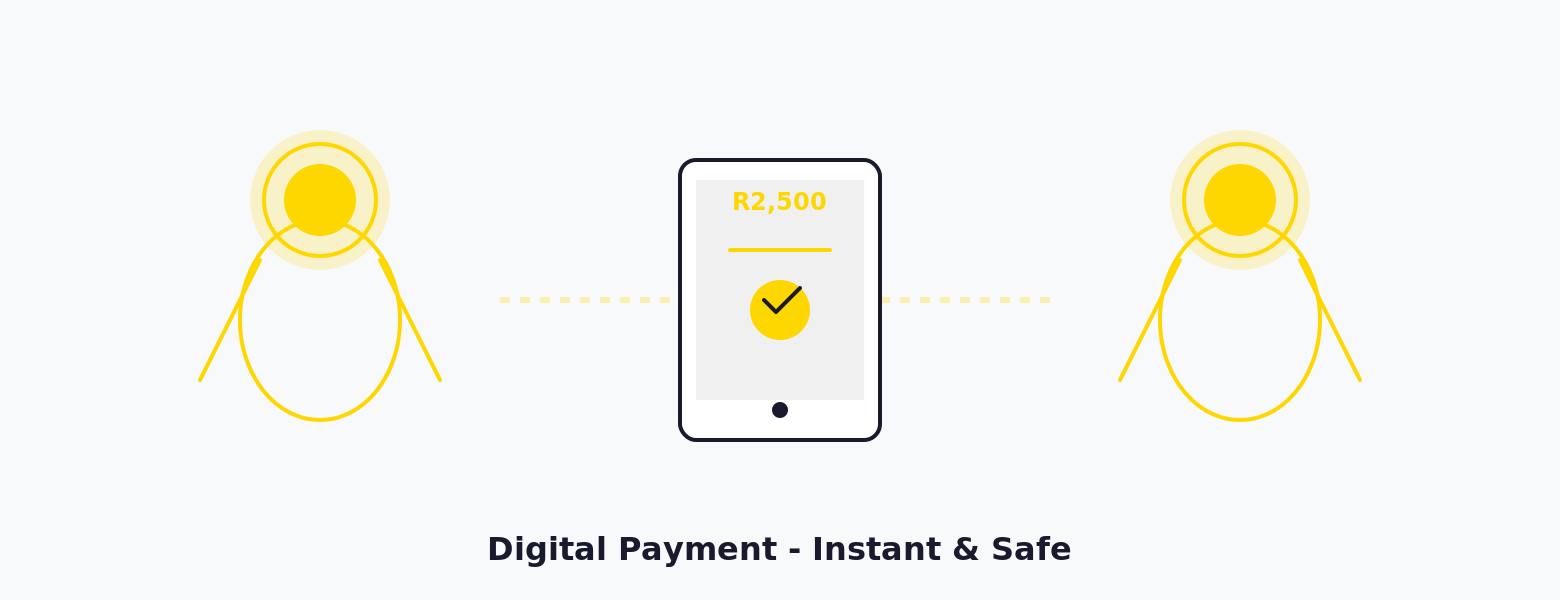
Learn how to pay your domestic worker digitally using SOLmate — safer than cash, with instant delivery and a clear payment record for both sides.
If you employ a domestic worker in South Africa, you're part of a massive economy. Nearly 1.3 million South Africans work as domestic workers, cleaners, and household staff. Most of them still receive their wages in cash — a system that's risky, untracked, and outdated.
But here's the truth: paying your domestic worker digitally isn't just modern. It's fairer, safer, and easier for everyone involved.
This guide shows you why digital payments matter and how to make the switch without hassle.
Why Cash Payments Are Holding Everyone Back
Cash feels simple. Hand it over, no paperwork, no fuss. But simplicity comes with serious downsides.
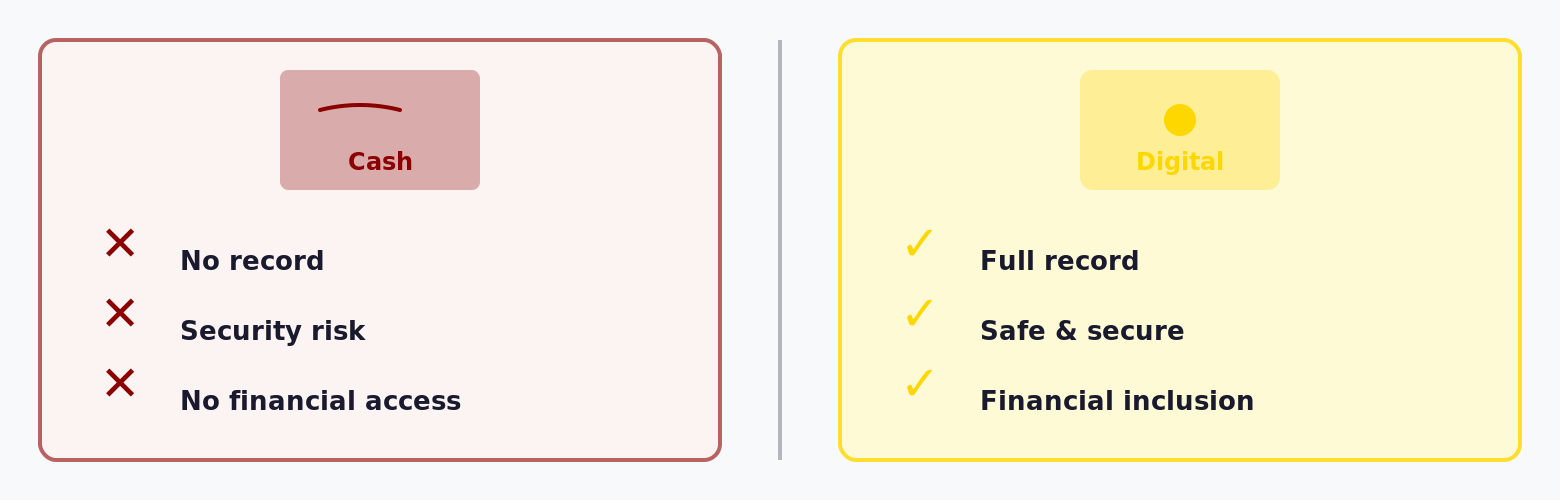
Security risks are real. Carrying large amounts of cash home after a shift puts domestic workers at risk of robbery. For employers, cash payments also leave no paper trail — which can create tax and compliance issues.
There's no proof of payment. Without a record, disputes happen. Did the worker receive R800 or R700? This is especially problematic if a domestic worker needs to prove income for a loan or a child's school application.
Financial services stay out of reach. Without payment records, a domestic worker can't build a credit history. They can't get a bank account at many traditional banks. They're trapped in a cash economy.
There's no protection under the law. The Department of Labour can't investigate wage disputes if there's no evidence.
Digital payments fix all of these problems — and cash quietly costs both sides more than it seems; we've broken down the hidden cost of cash in a separate guide.
What a SOLmate Account Means for Your Domestic Worker
This isn't about convenience for employers. It's about giving domestic workers real access to financial services — often for the first time.
With a SOLmate account, your worker gets a MasterCard debit card and a full digital wallet. Here's what that unlocks in practice:
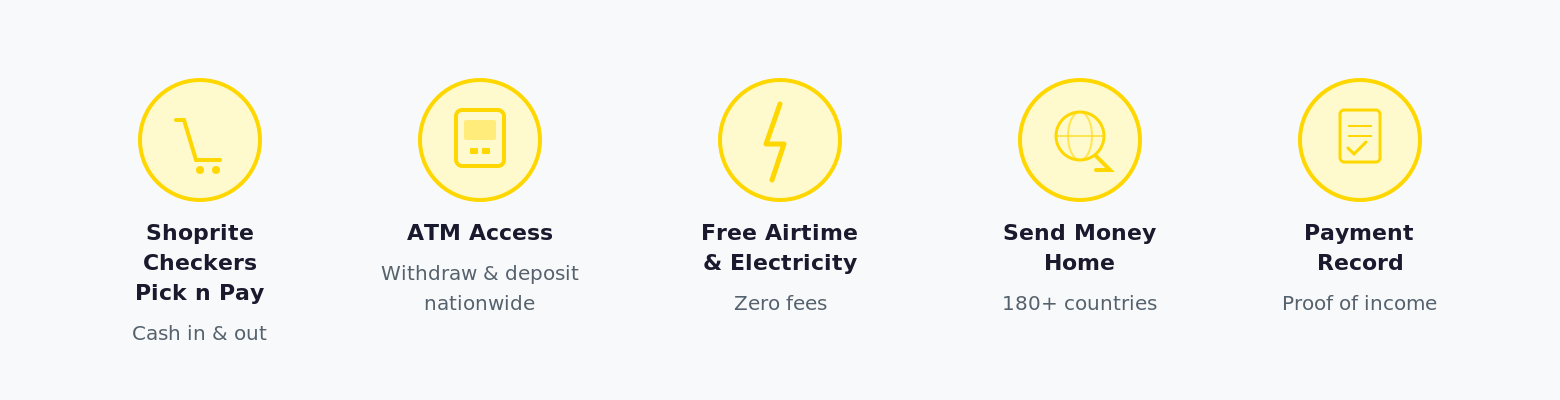
Cash deposits and withdrawals everywhere they already shop. Your worker can deposit and withdraw cash at Shoprite, Checkers, Pick n Pay, and other major retailers — stores that are in every neighbourhood and township across South Africa. They can also use any ATM nationwide. No need to travel to a bank branch or stand in long queues. The places they already buy groceries become their bank.
Fee-free airtime and electricity. SOLmate charges zero fees on airtime top-ups, electricity purchases, and DSTV payments. For someone earning a modest salary, saving R50–100 per month on these everyday purchases makes a real difference.
A proper payment record. Every salary payment shows up in the app with the date and amount. Your worker can prove their income to landlords, schools, government agencies, or anyone who asks. This opens doors that cash never could.
Instant money transfers to family abroad. Many domestic workers support families in Zimbabwe, Mozambique, Malawi, and beyond. With SOLmate, they can send money home instantly — right from their phone, with reasonable fees. No more risky trips to informal money transfer shops. No more losing half a Saturday standing in a queue. Just open the app, send the money, and it arrives.
A real financial identity. A SOLmate account gives your worker an account number, a debit card, and a transaction history. That's the foundation for building a credit record, accessing insurance, and eventually qualifying for financial products that were previously out of reach.
How to Set Up Digital Payments for Your Household Worker
Here's the good news for employers: you don't need to change your own banking at all. You can pay your domestic worker from any bank account — just send an EFT to their SOLmate account number. It works exactly like paying anyone else electronically. If you also use SOLmate, transfers between users are instant and free — but it's not a requirement.
The important part is setting up your worker with a SOLmate account. Here's how:
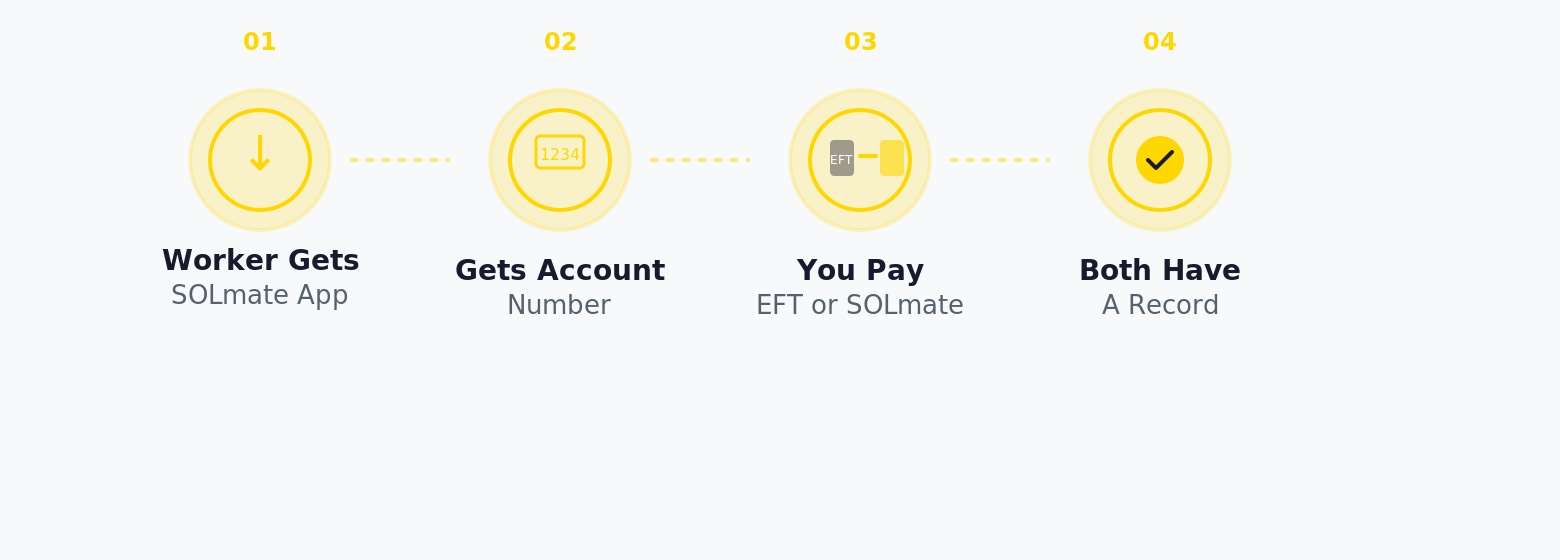
- Step 1: Help Your Worker Download SOLmate — SOLmate accepts South African IDs, foreign passports, and asylum seeker documents. Help your worker download the app from Google Play or the App Store and walk through the registration together. It takes about 10 minutes.
- Step 2: Your Worker Gets an Account Number — Once registered, your worker receives their own account number. Share this with your payroll or save it for EFT payments — just like any other bank account number.
- Step 3: Pay on Payday — Send the salary from your bank via EFT to their SOLmate account number. Or, if you also use SOLmate, transfer directly in the app for free. Either way, the money arrives and your worker gets an instant notification.
- Step 4: Both of You Have a Record — Every payment is logged in your worker's SOLmate app with the date, amount, and reference. No more disputes about who paid what. Clean records for both sides.
What About Workers Without a Bank Account?
That's exactly the point — they don't need one. A SOLmate account is not a traditional bank account. It's a digital wallet with a real MasterCard, and it's designed for people who have been excluded from the banking system.
Your worker can sign up with a foreign passport or asylum seeker document — something most banks refuse. Once they have the account, they can:
- Receive salary via EFT from any bank — just like a regular account number with reference number (here's how receiving a salary works)
- Deposit cash at Shoprite, Checkers, Pick n Pay, and other major retailers
- Withdraw cash at those same stores and at any ATM in South Africa
- Pay in-store with their MasterCard at any retailer that accepts cards
- Shop online using the virtual card
- Buy airtime and electricity with zero fees
- Send money home to family in 190+ countries, instantly from the app
The key thing here is accessibility. Shoprite, Checkers, and Pick n Pay are everywhere — in every town, every township, every neighbourhood. Your worker doesn't need to find a bank branch or an ATM. They can manage their money at the same store where they buy bread and milk.
Frequently Asked Questions
Does my worker need a smartphone?
Yes, but basic smartphones cost R800–R1,500.
What about data costs?
The SOLmate app uses very little data. Receiving a payment uses kilobytes.
Is it safe?
Yes. Digital wallets use encryption. Safer than cash in a pocket or under a mattress.
Can my worker still negotiate salary?
Of course. Digital payments don't change employment agreements.
What if my worker loses their phone?
They can recover their account with their ID and phone number.
Do I need a SOLmate account to pay my worker?
No. You can send an EFT/RTC from any South African bank to your worker's SOLmate account number. If you also have SOLmate, transfers between users are instant and free — but it's completely optional for the employer.
Where can my worker access their money?
At any ATM in South Africa, and at major retailers like Shoprite, Checkers, and Pick n Pay for both cash deposits and withdrawals. They can also pay with their MasterCard anywhere cards are accepted — in-store and online.
The Future Is Digital
Switching to digital payments isn't just a business decision. It's an ethical one.
For workers: Digital payments give you power, payment proof, a financial record, options, and access to real services.
For employers: Digital payments simplify your life with clean, legal records and peace of mind.
Download SOLmate and set up your account today. Then help your worker get set up. The future of wages in South Africa is digital. Let's make sure no one gets left behind.
For more information on domestic worker rights and minimum wage rules, see the Department of Employment and Labour (including the National Minimum Wage guidelines).