
How to Make Your Salary Last the Whole Month: A Simple Budget Plan
Category: Budgeting · Published: 13 April 2026 · Read time: 5 min
It's the 20th of the month and your bank account is already sitting at zero. Sound familiar? You're not alone. Millions of South African workers live through the same cycle every month — money comes in, money disappears, and you spend the last week before payday borrowing, stressing, or skipping meals.
The good news is that this doesn't have to be your reality. You don't need a finance degree or a bigger salary to fix it. You need a simple plan — and about 20 minutes on payday to set it up.
This guide is built for workers earning between R5,000 and R15,000 a month. Real numbers, real South African prices, no complicated jargon.
The 50/30/20 Rule (Adapted for South Africa)
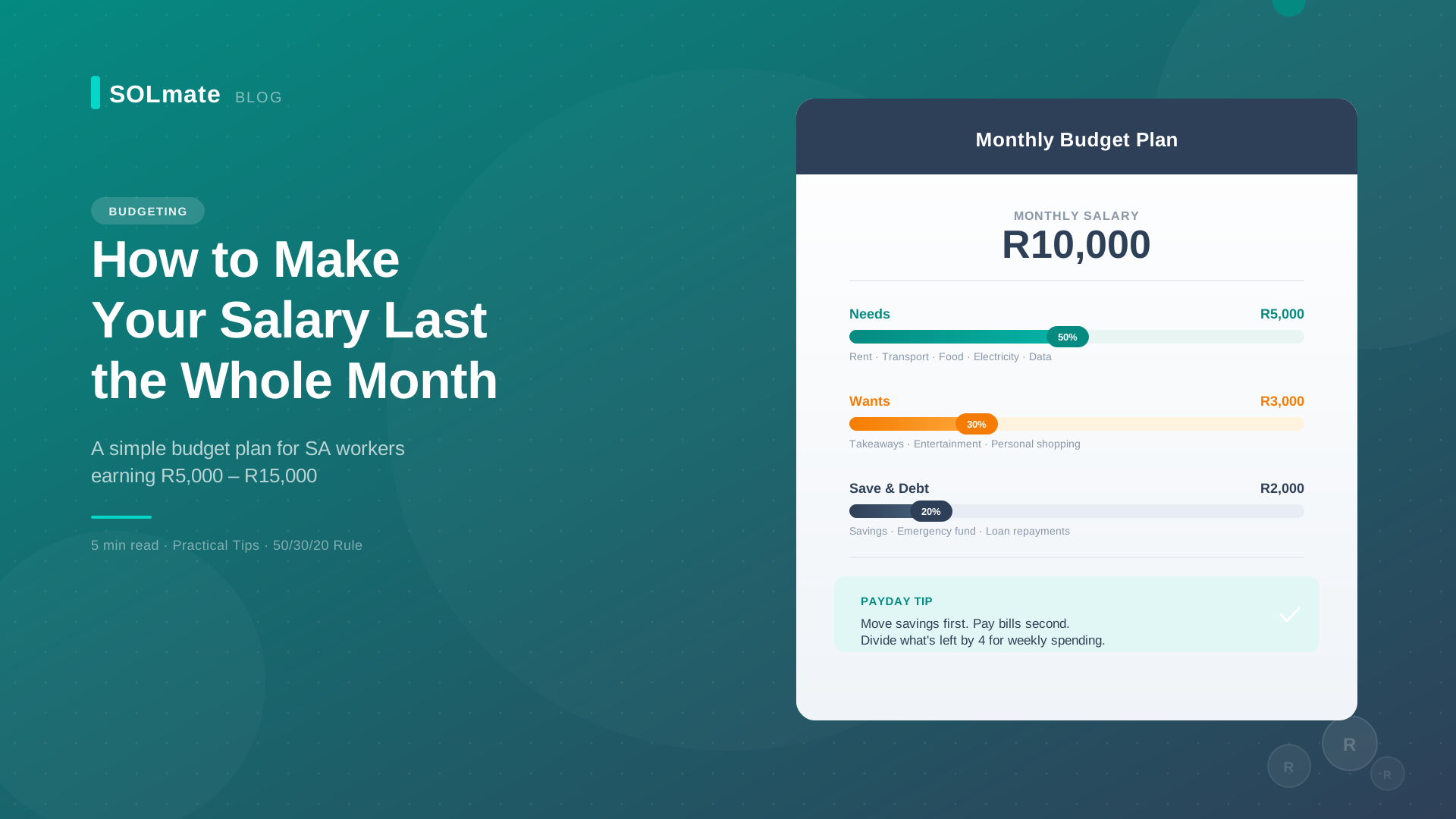
The 50/30/20 budget is one of the simplest money systems in the world. Here's how it works, adjusted for what life actually costs in SA:
- 50% — Needs: Rent, transport, food, electricity, airtime/data. These are non-negotiable costs you must pay to survive and get to work.
- 30% — Wants: Takeaways, entertainment, clothes that aren't for work, subscriptions. The stuff you enjoy but could technically live without.
- 20% — Save & Pay Debt: Even R100 into savings counts. If you have debt, this portion goes there first.
Be honest with yourself: If your needs take up more than 50%, that's okay — most SA workers are in the same position. The goal is to know your numbers, not to be perfect on day one.
What This Looks Like in Rands
Let's take three real salary levels and see how the 50/30/20 split works in practice:
| Category | R6,000/month | R10,000/month | R15,000/month |
|---|---|---|---|
| Needs (50%) | R3,000 | R5,000 | R7,500 |
| Rent, transport, groceries, electricity, data | |||
| Wants (30%) | R1,800 | R3,000 | R4,500 |
| Takeaways, entertainment, personal shopping | |||
| Save/Debt (20%) | R1,200 | R2,000 | R3,000 |
| Savings, emergency fund, loan repayments |
On a R6,000 salary (close to the current minimum wage of R5,890 for a 45-hour week), R3,000 for needs is tight. That's real. If rent alone takes R2,000–R3,500 in a shared place, you'll need to adjust. The point is to start with these targets and then adapt to your situation.
Your 20-Minute Payday Plan
Do this every single payday, before you spend a cent on anything else:
1. Move your savings first
The moment your salary hits, transfer your 20% (or whatever you can manage — even R200) into a separate savings account or your stokvel. If you don't move it immediately, you'll spend it. This is the most important step.
2. Pay your fixed bills
Rent, transport costs for the month, electricity, data/airtime. Pay these right away so they're done and you know exactly what's left.
3. Work out your weekly allowance
Take whatever is left and divide it by 4. That's your weekly spending money for food, transport top-ups, and personal spending. Don't touch next week's portion — no matter what.
4. Use cash or a separate account for weekly spending
Draw your weekly amount in cash, or keep it in a separate account. When it's gone, it's gone. This one trick stops most overspending dead.
Quick tip: If you get paid weekly or fortnightly, the same system works — just split your pay into needs, wants, and savings each time money comes in.
5 Budget Killers to Watch Out For
Even with a plan, these common traps can drain your money before month-end:
- Lending money you can't afford to lose. It's hard to say no to family and friends, but lending your rent money helps no one. Be honest: "I've already budgeted everything this month."
- Buying airtime and data daily. Daily R10 bundles cost you R300/month. A monthly bundle at R150–R200 saves you nearly half.
- Takeaways and fast food. A R90 fast food meal three times a week is over R1,000 a month. Cooking in bulk on Sunday can cut that to R400.
- Paying only the minimum on loans. Minimum payments keep you in debt for years. Even R50 extra per month on a loan makes a real difference.
- No plan for irregular expenses. Car repairs, school fees, December — these aren't surprises. Set aside a small amount monthly so they don't wreck your budget.
What If 50/30/20 Doesn't Fit My Salary?
If you're earning minimum wage or close to it, your needs might take 70% or 80% of your pay. That's the reality for many South Africans right now, and there's no shame in it.
Here's what you can do: flip the model. Start with a realistic "needs" number based on what you actually spend. Then decide on a small, fixed savings amount — even R100 or R200. Everything else becomes your flexible spending. The exact percentages matter less than having a plan and sticking to it.
The workers who build financial stability aren't the ones with the biggest salaries. They're the ones who made a plan and followed it, month after month, even when it felt pointless.
Remember: A budget isn't about restricting yourself. It's about giving every Rand a job, so you stop wondering where your money went.
Take control of your money with SOLmate
Track your spending, set savings goals, and get smart alerts before you overspend. Built for South African workers, by South Africans.